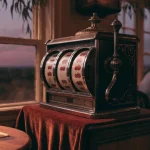
RTP describes a theoretical return over extended play, but it does not forecast the outcome of an individual session.

Return to player, or RTP, is a published percentage describing the share of stakes a pokie is designed to return over an extended run of play. It gives you a common measure for comparing stated game settings. A higher figure indicates a higher theoretical return under that setting, relative to a lower figure. It does not tell you what will happen to your balance during a particular session.
That distinction matters when you compare pokies with high RTP. The percentage is a property of the game’s stated configuration, not a forecast tailored to your stake, session length or results so far. It is useful for sorting figures on a like-for-like basis; it is not a reliable way to predict whether you will finish ahead. A comparison can identify which published setting has the higher theoretical return. It cannot turn that figure into a personal outcome.
Treat RTP as one column in a comparison table, not as a verdict on whether a game is right for you. If two games publish return figures on a comparable basis, the higher one is the stronger choice by that criterion alone. “Best,” without a stated criterion, leaves too much unsaid. A player comparing theoretical returns may rank games differently from someone who cares more about the style of play or the features they enjoy.
If you’re looking for high-RTP pokies in Australia in 2026, use this list as a starting point and check the published RTP for the specific games you plan to play. The details below highlight what is known about each operator, rather than making claims about game returns.
Uptown Pokies
Uptown Pokies has operated since 2017 under a Curacao licence. Its minimum deposit is A$20.
JustCasino
JustCasino is listed with a licence from the Curacao Gaming Control Board. That licensing detail is the main available point of reference for this operator.
House of Pokies
House of Pokies lists an international iGaming licence, though the jurisdiction is not named. PayID payouts are stated as taking 1–24 hours; the minimum deposit is A$30, or A$10 with PayID.
Wild Tokyo
Wild Tokyo is listed with a Curacao licence and a A$10 minimum deposit. Its stated payout speeds are 30–60 minutes for crypto and 1–5 days for fiat.
DragonSlots Casino
DragonSlots Casino is listed with a Curacao Gaming Authority licence associated with Jumpman Gaming Ltd. Licensing is the main available detail for this operator.
Bizzo Casino
Bizzo Casino is listed with a Curacao Gaming Control Board licence associated with TechSolutions Group N.V. The available information focuses on its licensing.
Neospin
Neospin is listed with Curacao Gaming Control Board licence OGL/2023/176/0095, associated with Hollycorn N.V. Its licence details are the main available point of reference.
Golden Pokies
Golden Pokies is listed with a Curacao licence. That is the main available detail to consider when reviewing the operator.
Thor Casino
Thor Casino is listed with a Curacao licence issued by Antillephone N.V. and associated with Versus Odds B.V. Its minimum deposit is EUR 20.
Vegaz Casino
Vegaz Casino is listed with Curacao licence OGL/2024/1335/0780. Its minimum deposit is EUR 20.
The key phrase is “by that criterion.” A higher stated return does not mean a game will pay more during your next session, or that a win is more likely on your next turn. Nor does it describe the timing or size of any particular payout. The figure summarises a theoretical return across extended play; your session is a much smaller slice of that picture.
So, when you see a high RTP figure, first identify what it is being compared with. Is it the same type of published return measure, and does it refer to the setting available in the version you are viewing? Without that context, a percentage can look precise while leaving the comparison incomplete. Precision is not the same as a useful answer.
A published figure is only a fair comparison if it matches the game setting being offered. A specialist review reports that some providers give casinos a choice of RTP settings for a particular pokie. As a result, the same title can carry different stated returns in different casino versions. The game’s name alone may not tell you which setting applies.
This is a reason to check the information attached to the specific version, rather than assume a figure found elsewhere automatically applies. If the available details do not make the setting clear, you do not have enough information to make a confident comparison on RTP alone. That is a limit of the evidence in front of you, not a reason to fill the gap with a guess.
 Pokies by Region: Australian City and State GuideExplore Australian pokies and casino topics organised by city and state, including Adelaide, Sydney, Tasmania and Western Australia.
 Live Casino Online in Australia: What to CheckLearn how Australian law, game formats, identity checks, bonuses and limits shape live-casino choices; no Australian online casino licence has been issued.
Keep the question narrow: what return is stated for this version, and what other version are you comparing it with? If the figures refer to different settings, the comparison may still be informative, but you should not treat them as though they describe identical configurations. A table can make the distinction visible: title, stated setting, and where that setting is shown. No winner needs to be declared until the entries are genuinely comparable.
“High RTP” is a relative description, not a guarantee or a complete quality rating. It means the stated return compares favourably against another figure under the same measure. It does not certify that a pokie is suitable for you, establish that a particular session will be profitable, or settle every question about the game.
For a useful comparison, separate three things: the published return, the particular setting attached to the version you can see, and your own expectations. The first helps compare theoretical returns. The second tells you whether the figure applies to the game instance you are considering. The third needs to remain realistic: a stated RTP is not a promise that you will recover your stake, let alone make a profit.
That is why the best high-RTP pokies cannot be identified by a large-looking figure alone. “Best” depends on what you are measuring, and RTP answers only one part of that decision. If your criterion is stated theoretical return, compare the figures that apply to the actual versions available to you. If the setting is unclear, mark it as unclear rather than treating an unconfirmed percentage as settled.
A high RTP figure is a theoretical return over extended play; it is not a promise that you will recover your stake or make a profit during a particular session.
A high RTP can help you compare stated return settings. It cannot tell you how your session will end. A useful distinction.
A published RTP figure addresses a game’s stated return, not whether the site offering it is authorised to serve people in Australia. These are separate questions. Before treating an online pokie as a candidate because of its advertised percentage, you need to understand the legal position of the operator and the limited protection available if a dispute arises.
The central law is the Interactive Gambling Act 2001. It makes it illegal for a company to provide real-money online pokies to people in Australia without a domestic licence. The same prohibition covers online casino-style services such as poker and table games. No domestic licences for online casinos have been issued, so there is no Australian-licensed online casino.
That distinction matters when you see an offshore site describing itself as licensed overseas. A foreign licence is not an Australian licence and does not give the operator permission under Australian law to provide real-money online pokies to people here. Nor does an RTP statement change the operator’s legal position. A percentage on a game page is not evidence of Australian authorisation.
The Act targets the companies providing prohibited interactive gambling services, rather than individual players. An Australian player is not the target of the operator prohibition simply for playing on an offshore site that accepts them. That distinction should not be stretched into an assurance that offshore play is protected or endorsed by Australian authorities. The operator’s conduct and the player’s position are not the same legal question.
The Australian Communications and Media Authority (ACMA) is the primary domestic regulator responsible for enforcing the Act. It blocks access to illegal offshore gambling sites, and internet service providers must comply with its blocklist. Blocking is an enforcement measure directed at access to services; it does not turn an offshore site into a domestic operator or create an Australian licence.
For you, the practical point is straightforward: a site may be reachable at a given time, but reachability is not proof that the service is authorised in Australia. A foreign regulator’s approval, a payment option, or a game’s stated RTP does not replace the missing domestic licence. Those details answer different questions.
The most serious limitation is the lack of an Australian remedy against an offshore casino that refuses to pay. If a site withholds winnings, Australian players have no legal recourse in Australia against that offshore casino. A favourable game return figure cannot reduce this risk. Nor can it ensure that a balance will be paid out when requested.
This makes the legal context more than a technical footnote to a comparison of RTP pokies in Australia. A stated percentage may help describe a game, but it cannot tell you whether a provider will honour a withdrawal or whether you can enforce a claim locally. The distinction is important: the game’s advertised return concerns the game; the operator’s legal status and conduct concern the service.
No Australian Recourse
If an offshore casino withholds winnings, Australian players have no legal recourse in Australia against that operator, regardless of the game's RTP.
Do not treat a foreign licence as a substitute for Australian consumer protection. An offshore company may be subject to rules where it is based, but that does not give you an Australian-licensed casino to turn to. If a dispute crosses borders, the existence of a licence elsewhere does not remove the stated lack of Australian legal recourse against an offshore casino that withholds winnings.
When you assess a claim about the best RTP pokies Australia has to offer, separate the claim into two parts. First, what return percentage is stated for the game? Second, who is offering it, and what legal position applies to that operator? The first does not answer the second. Calling a game “high RTP” cannot make the site offering it locally licensed.
This is also why a list of percentages, on its own, is an incomplete basis for a decision. A figure may describe the game’s stated return, but it says nothing about the operator’s Australian authorisation or the remedies available if a payment dispute occurs. Keep those criteria in separate columns. Better on one measure does not mean safer on the other.
The law does not make an individual player responsible for the operator’s breach, but that is not the same as a guarantee of protection. The absence of player liability and the absence of Australian recourse against an offshore site can both be true. The first concerns who the Act targets; the second concerns what happens if the operator fails to pay.
So, when you encounter RTP claims for online pokies, treat them as game information only. Check the legal context separately, and do not mistake access to an offshore service for domestic authorisation. In Australia, no online casino holds a domestic licence, and an offshore casino that withholds winnings leaves players without an Australian legal remedy. That is the decisive market distinction—not a percentage printed beside a game.
A phone browser changes how a page appears on screen; it does not change what the service is or whether it is authorised in Australia. A pokie presented on a small display remains an online gambling service. A mobile-friendly layout, a saved bookmark or a page that loads successfully is not evidence of an Australian licence.
There is no Australian-licensed online casino. The practical distinction matters when you encounter a page describing online RTP pokies as available to Australian players. A return figure displayed in a mobile browser tells you what the page claims about a game setting; it does not establish that the operator is licensed here, that the figure applies to the version on offer, or that the service has been approved for Australian residents. Convenience and status are separate columns.
The browser itself does not verify any of those claims. It can display text, game imagery and account pages, but the screen cannot confirm an operator’s legal standing or independently validate an RTP statement. The same is true whether you use a phone, tablet or computer. A polished mobile presentation is still only a presentation.
Australian rules apply to online casino-style services, not merely to a particular type of device. The Interactive Gambling Act 2001 prohibits operators from providing real-money online casino games to people in Australia. ACMA enforces the Act and blocks access to illegal offshore gambling sites; internet service providers must comply with its blocklist. A site being mentioned in a mobile search or appearing in a browser does not reverse that position.
Reachability via a mobile browser or a polished layout is not proof of an Australian licence or local authorisation.
This is why “it opened on my phone” is a poor test of legitimacy. A page may be visible without being authorised, and access may be blocked. Neither outcome changes the regulatory status of the operator. The screen is not a licence. Dry, but useful.
If your interest is comparing published RTP information, keep that task separate from trying to open a real-money game. You can assess what a page says about a return setting without treating the page as a recommendation or an invitation to play. Read the claim as information about a stated game configuration, not as proof of local approval or a promise about a session.
The phrase “best RTP” also needs a defined criterion before it can mean much. A higher published return may be the comparison you have in mind, but the number alone cannot establish that a service is lawful to use in Australia. Nor does a mobile layout make the figure more reliable. A neat display is not independent verification.
For a practical check, note what the page actually states and whether it identifies the relevant game version and RTP setting. Then keep the access question distinct: Australian residents do not have a domestically licensed online casino option, and ACMA’s blocking regime applies to illegal offshore sites. Do not treat a workaround, a different browser or a change of device as a change in the rules.
Mobile browsing can make information easier to read. It cannot turn an unlicensed service into a licensed one, and it cannot make an RTP claim a guarantee. If the decision criterion is Australian authorisation, the device contributes nothing.
A headline return figure can look like a clear answer when you are comparing pokies: one percentage appears higher, so that game seems to offer the better return. But a maximum figure is not a promise about what you will receive, or even proof that the version available to you uses that setting. To judge the claim, you need to know what the figure describes and whether it applies to the particular game configuration you can access.
Some providers allow a casino to choose between several RTP settings for the same pokie. A specialist review has reported this arrangement, which means a game’s published return can differ between casinos. The title alone may not tell you which setting is in use. A figure described as the game’s highest return may therefore refer to one possible configuration, rather than the configuration offered at every site.
That distinction matters when you see a high figure attached to a game name. Unless the displayed information identifies the setting for the version you are considering, the maximum is not enough to establish that you are playing that version. Nor does a higher stated setting guarantee that a particular session will finish ahead. It is a comparison of configurations, not a forecast for your balance.
The outcome of a spin is generated independently by the game’s Random Number Generator. A previous win or loss does not make the next result due, and a high published return does not alter that basic uncertainty. Even when a setting has a higher stated RTP than another, individual results can vary sharply from the long-run figure. No single session has to resemble it.
Some providers allow casinos to choose between several RTP settings for the same pokie. A headline figure may refer to the highest possible configuration, which may not be the one offered by the casino you are using.
This is why “highest” needs a criterion. If you mean the largest figure a game can be configured to display, that may not be the setting operating at the casino you are viewing. If you mean the return attached to a specific version, you need evidence for that version—not just a headline about the game. Without that distinction, a comparison can place unlike configurations side by side and make the result look more decisive than it is.
When assessing a claim, separate three things: the game title, the RTP setting, and the casino’s version of that game. A provider may make more than one setting available; a casino’s selection determines which one applies there; and the stated percentage still does not promise a session result. Keeping those points apart is more useful than treating the largest number as a simple winner.
For anyone looking for the highest-return pokies in Australia, the same caution applies to any headline maximum. The number can help describe a setting, but it cannot confirm that setting is available in the version at hand or tell you what your next spins will produce. A ranking based only on a maximum may therefore answer a narrower question than it appears to.
Read the figure as a specification, not a payout forecast. If the setting is not made clear, the maximum tells you less than its prominent placement suggests. High on paper is not a settled result.
A pokie’s stated RTP describes its return setting; it does not tell you whether winnings can be withdrawn promptly or in full. For a practical comparison, keep those criteria separate: the game’s published return is one measure, while the casino’s cash-out rules determine how accessible a balance may be. A higher RTP cannot compensate for a withdrawal process that does not suit you.
Check the withdrawal terms before depositing. A specialist casino review has reported that some casinos set weekly or monthly cash-out caps of $5,000–$10,000. Under a cap of that kind, a $50,000 jackpot could be paid in instalments over several years rather than as one transfer. The relevant question is not only whether a win is credited, but how much can be released within the stated period and what conditions apply. Read the current terms for the specific casino; a reported cap is not a rule that applies everywhere.
Identity checks can also affect when funds become available. Specialist casino reviews report that operators may ask for verification before approving a first withdrawal. Documents can include a photo of your identity document and proof of address; some operators may also request a selfie holding the identity document. Complete the required checks before requesting a cash-out, and make sure the submitted details match your account. An RTP figure says nothing about whether your documents will be accepted or how long that review will take.
A useful comparison therefore has separate columns for the game’s stated RTP, the withdrawal cap and period, and the documents required before withdrawal. Do not treat a strong return figure as evidence of a smooth payout policy. Nor does a large balance alone tell you how quickly it can be accessed.
The “best payout” depends on the criterion you mean. If you mean a game’s published return, compare its stated RTP setting. If you mean access to winnings, focus on cash-out limits and verification requirements instead. Those are different measures. Keep them separate.
A pokie in a pub or club sits within a venue-based framework. That framework can set duties for the venue and staff without telling you what return percentage applies to a particular machine. A rule about who must be on duty, or how a venue records a gambling-related incident, is not an RTP disclosure.
A report by regionriverina.com.au describes a requirement taking effect from 1 July: venues operating more than 20 gaming machines must have a dedicated responsible gambling officer (RGO) on duty whenever those machines are running. The report also says venues have a one-month grace period to remove signage and put the officer arrangements in place. These are venue obligations, not measurements of a machine’s return.
The same report describes a requirement for venues to maintain a gambling incident register. It is intended to record occurrences, including behaviour that indicates a patron may be at risk of gambling harm or already affected by it. That recordkeeping gives staff a way to document incidents; it does not supply a percentage for Australian pokies RTP or establish how much a player can expect to receive.
Different jobs.
For a player comparing return figures, the distinction matters. A physical machine’s venue rules concern oversight and the handling of possible harm. Online RTP is a separate matter: a venue staffing requirement cannot confirm the setting of an online game, and it cannot be used as evidence that an online figure applies to a machine in a local venue.
Nor should you treat the presence of an RGO or an incident register as proof of a particular payout rate. Those measures relate to venue practice. They do not rank machines, identify a higher-return option or translate into an expected result for an individual session.
When you see claims about Australian venue machines, check what the claim actually describes. If it refers to staffing, signage or incident recording, it is about venue operations. Unless a return percentage is stated for the specific machine and its applicable setting, those venue rules do not answer the RTP question. Similar terminology does not make the contexts interchangeable.
A run of wins or losses can feel like a pattern, but it does not tell you what the next spin will do. In a pokie, a Random Number Generator (RNG) determines the outcome of each spin. That outcome is separate from the ones before it: a previous loss does not make a win more likely next time, and a recent win does not make another win due.
This is the key distinction between observing a sequence and predicting one. You might see several similar outcomes in a row and feel that the game is “due” to change. But the RNG does not keep a visible tally of your recent results and adjust the next spin to balance them. A streak is part of the random sequence, not evidence that a reversal is approaching.
The same applies when you have just landed a win. It does not give the next spin a special advantage, and a string of wins does not establish that the game has entered a more favourable phase. A memorable sequence can be easy to interpret as a signal. It is still a record of past outcomes.
That matters when you assess pokies RTP. RTP is a return figure associated with a game over play, not a forecast for the next spin or a promise that a short session will match the stated return. Random outcomes can vary from spin to spin. Knowing the published figure does not reveal what the RNG will produce next.
A practical comparison should therefore keep two questions separate: what return setting is stated for the game, and what can be inferred from your recent results. The first is a published game detail; the second is not a reliable way to predict a future outcome. Treating a losing sequence as a reason to keep playing, or a winning run as proof that more wins are coming, confuses chance with evidence.
The useful rule is simple: past spins describe what happened, not what must happen next. If you choose to play, make decisions using limits you set in advance rather than trying to read a pattern into the results. No signal there.
A game’s title alone may not tell you which return setting is in use. A specialist review reports that some providers let casinos choose between multiple RTP settings for the same pokie. As a result, one title can be associated with different stated return percentages at different sites.
That matters when you compare high-RTP online pokies. If you compare only the game name, you may miss the setting attached to the version offered by a particular casino. The useful comparison is not simply “same title or different title”; it is the published RTP for the specific version available.
| Comparison point | What to establish |
|---|---|
| Game title | Is it the same pokie? |
| RTP setting | Which return percentage is stated for that version? |
| Casino | Does its information identify the setting offered there? |
The table is a checklist, not a ranking. A title that appears with a higher percentage in one listing is not automatically available at that setting elsewhere. Nor does a provider’s ability to offer several settings establish which one a casino has selected. Treat each listing as specific to the site and version it describes.
When details are unclear, avoid filling the gap with the figure shown for another casino. That would compare different settings as though they were identical. Look for a clearly stated percentage tied to the exact game version, and keep the source of that information in view. If the setting is not identified, the comparison remains incomplete.
This distinction also changes what “better” means. If your sole criterion is the stated RTP, the higher published setting ranks ahead on that criterion only. It does not establish that the setting is used by every casino carrying the game, or that a particular result will follow. The figure is a property of the stated configuration, not a label that necessarily follows the title everywhere.
A tidy comparison therefore records the game, casino and stated setting together. Leave an entry unranked if its setting is not clear; do not borrow a percentage from another listing to make the table look complete. A neat table is useful only when its rows describe like-for-like versions. Otherwise, it is just tidy confusion.
A comparison of pokies with the highest RTP needs to match like with like. A percentage beside a game title is not enough on its own: the same pokie can be offered at different RTP settings, depending on the setting a casino has selected. A specialist review has reported this variation, so a figure attached to a game name should not automatically be treated as universal.
For a useful comparison, record the game, the stated RTP, the casino displaying it and the page where the figure appears. Then check whether the casino itself shows the same percentage for that specific game. If the figures differ, they may refer to different settings rather than a simple reporting error. Keep each entry tied to its setting and venue; otherwise, a table can make unlike figures look directly comparable.
The criterion for a higher published return is straightforward: compare the stated percentages for the same game and setting context. But that only identifies which listed figure is higher. It does not establish that the game is the best choice overall, or that another casino offers the same version. “Best” depends on the criterion you care about, and a ranking based on an unmatched figure has no solid footing.
A careful comparison also avoids turning a partial set of figures into a market-wide winner. A list can only rank the entries it actually covers. Better to show the basis for each entry than to award a title that sounds definitive.
When you check a published RTP, look for a clear link between the percentage and the exact game configuration. If that link is unclear, mark the figure as unconfirmed rather than placing it alongside figures with explicit settings. This keeps the comparison honest and makes its limits visible without pretending that every listing represents the same version.
The result is a comparison of stated settings, not a universal league table. It can show which of the figures you have checked is higher, but it cannot name a verified winner without comparable entries. A neat ranking is easy. A sound one takes matching evidence.
An RTP figure describes a game setting; it is not a measure of how much you can afford to lose. If you compare pokies by their published return, keep that criterion separate from the controls you would use to manage time and spending. A higher stated return does not make a session safe, predictable or suitable for your budget.
Responsible-gambling tools include deposit limits, loss limits, session time limits and self-exclusion. Each addresses a different boundary. A deposit limit restricts how much you put into an account; a loss limit sets a ceiling on losses; a session limit helps define when to stop playing; and self-exclusion is intended to prevent access for a chosen period or longer. Where an operator offers these controls, check how they work before depositing: what activity they cover, how to set them, and whether changes take effect immediately. Do not assume the wording or operation is identical across sites.
A limit is useful only if you can keep to it. Set a budget and a stopping point before play, rather than revising them after a loss or while trying to recover money. If you find yourself repeatedly raising a limit, continuing beyond the time you planned, or struggling to stop, treat that as a reason to step away—not as a reason to search for a different RTP.
Self-exclusion also has an important boundary in Australia. BetStop applies to Australian-licensed operators; it does not bind offshore sites. It therefore cannot be relied on to block access to an offshore casino. This distinction matters when you assess any tool: its protection depends on which operators are covered, not on the game’s advertised return.
Use RTP comparisons only for comparing stated game returns. Use limits and self-exclusion to manage exposure, and do not treat one as a substitute for the other. If a site’s controls are unclear or unavailable, that uncertainty is itself relevant to your decision. A table can show which figure is higher; it cannot decide whether playing fits your circumstances. Different criteria, different jobs.
You must be at least 18 years old to gamble online in Australia.
Australian law prohibits operators from offering real-money online pokies to people in Australia without a domestic licence, and no Australian online casino licences have been issued. The law targets operators rather than individual players, but if an offshore casino refuses to pay you, you have no legal recourse in Australia.
Yes. Some game providers let casinos choose between different RTP settings for the same pokie, so check the stated setting for the specific version you can access.