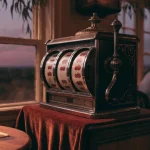
Progressive prizes grow from eligible wagers, but triggers, pool structure and bet conditions shape how a jackpot can be won.

A progressive jackpot is a prize pool that grows as wagers are placed on the game linked to it. The key difference from a fixed jackpot is that its advertised value can change: part of eligible play is directed into the pool, so the prize can rise between wins. It is not a separate bonus that appears from nowhere. Each contribution is small beside the displayed total, but repeated contributions accumulate.
The basic sequence is straightforward. A player places a wager and spins; a predetermined share of that wager is allocated to the progressive pool. The rest is used within the game’s broader payout structure. As further spins contribute, the pool increases until the winning outcome occurs. After the jackpot is awarded, the pool returns to a starting value and begins accumulating again.
That reset matters when you read a jackpot display. The number shown is not a permanent feature of the game or a promise that the next spin will pay it. It records the pool’s current state. After a win, the value is lower because the accumulated prize has been claimed; subsequent eligible wagers build it back up. The cycle is accumulation, award, reset, then accumulation again.
Progressive jackpot slots can vary in how they work, so it helps to check the available operator details before choosing where to play. Use this list as a starting point and verify the games and terms that matter to you.
Uptown Pokies
Uptown Pokies has operated since 2017 under a Curacao licence. You can start with a minimum deposit of A$20.
JustCasino
JustCasino is listed with a Curacao Gaming Control Board licence. You can use that licensing detail as one point of reference when reviewing the operator.
House of Pokies
House of Pokies lists PayID payouts of 1–24 hours and a minimum deposit of A$30, reduced to A$10 when using PayID. Its source describes the licence as international but does not name the jurisdiction.
Wild Tokyo
Wild Tokyo lists a Curacao licence and a minimum deposit of A$10. Its stated payout times are 30–60 minutes for crypto and 1–5 days for fiat.
DragonSlots Casino
DragonSlots Casino lists a Curacao Gaming Authority licence held by Jumpman Gaming Ltd. You can consider this licence information when assessing the operator.
Bizzo Casino
Bizzo Casino lists a Curacao Gaming Control Board licence, with TechSolutions Group N.V. named in connection with it. This licensing detail is the available point of reference for you.
Neospin
Neospin lists Curacao Gaming Control Board licence OGL/2023/176/0095, with Hollycorn N.V. named in connection with it. You can use these details when reviewing the operator.
Golden Pokies
Golden Pokies lists a Curacao licence. You can treat this as a basic licensing detail when considering the operator.
Thor Casino
Thor Casino lists a Curacao licence issued through Antillephone N.V., with Versus Odds B.V. named in connection with it. Its minimum deposit is EUR 20.
Vegaz Casino
Vegaz Casino lists Curacao licence OGL/2024/1335/0780. The stated minimum deposit is EUR 20.
Descriptions of contribution rates are not fully consistent. One account gives a range of 1% to 5% of each wager, while another describes a predetermined share typically between 1% and 3%. Those figures should not be silently treated as the same claim. The stated rate depends on the account and game design, so the practical figure to check is the one shown in the particular game’s paytable or help screen.
The contribution is also not the same thing as the jackpot’s full value. A pool may have received many small additions over time, and the displayed total reflects that accumulated balance rather than the amount taken from any single spin. Nor does the visible growth tell you when the award will happen. It shows that money has entered the pool, not that the pool is nearing a predictable moment of release.
For a player comparing progressive jackpot pokies, this is the useful starting distinction: the jackpot amount is built through contributions, while the spin outcome remains a separate event. A rising figure can make one game look more attractive at a glance, but it does not turn the pool into a countdown. The mechanics explain how the prize grows; they do not provide a timetable for when it will be won.
When a winning result awards the progressive, the accumulated pool is paid out and the jackpot returns to its base amount. It does not continue from the previous total. The next prize cycle begins with that reset value, then grows as new wagers contribute to it. That is why the same game can display very different jackpot figures at different times.
This cycle applies whether you are looking at progressive jackpot pokies in Australia as a category or at online progressive jackpot slots in general: the pool’s growth is tied to wager contributions, and a win restarts it from the base. The labels used by a game can differ, but the essential movement is the same. A larger displayed pool means more has accumulated since the last reset; a smaller one may indicate that a recent win has started a new cycle.
One detail deserves care. A jackpot contribution explains funding, not the whole return from a game. The base game still has its own outcomes and payout structure, while the progressive component accumulates alongside them. Treating the growing pool as if every wager were simply being saved for one player would give the wrong picture: only a predetermined share is directed to it, and the game continues to produce other results.
If you are checking a particular game, use its own help information to confirm how the progressive is funded and what value is currently displayed. That is more informative than comparing headline totals without knowing whether they belong to the same kind of pool or cycle. A big number is visible; its mechanics are the part worth reading.
Legal Warning
Real-money online casino games, including slots, are prohibited services for operators to provide to people located in Australia.
In Australia, the legal setting also matters: real-money online casino games, including slots, are prohibited services for operators to provide to people located in the country. Describing how a progressive pool works is not an invitation to play online. The mechanics remain simple, even when the surrounding rules do not.
A progressive jackpot can appear in a pokie offered at more than one casino without each venue holding a separate copy of the prize. The pool is kept on the software provider’s server, rather than in an individual casino’s own jackpot reserve. Where a game is connected across participating venues, eligible play can therefore contribute to and compete for the same pool.
That arrangement changes where the prize is accounted for, not who handles your withdrawal. The software provider’s server tracks the pool, while the casino through which you played is the point of contact for account checks, payment requests and questions about the award. A shared balance is not a shared customer-service desk.
The phrase “online casino progressive jackpot” can describe different arrangements. A stand-alone prize belongs to one game environment; a network progressive links a pool across participating venues. A jackpot being hosted by a provider does not, by itself, mean every casino offering that provider’s games is connected to the same pool. The particular game and its jackpot information determine whether it is linked and which pool applies.
Before you treat a displayed figure as relevant to a game, check the game’s information panel and the casino’s terms. Confirm that the jackpot is active for that version of the game, and that your play is covered by the stated arrangement. Similar-looking game names or artwork are not proof that two games draw from one prize.
For Australian readers, there is also a separate legal limit on access: the Interactive Gambling Act 2001 prohibits operators from providing real-money online casino games, including slots, to people physically located in Australia. A provider-hosted pool does not change that rule. The technical location of a jackpot and the legality of an online service are different questions.
A large displayed jackpot is not the same thing as a confirmed payment schedule. Read the jackpot rules and payment terms before playing, and look for how a win is verified, whether payment is made as a single transfer or in instalments, and what conditions apply. A specialist review has reported that some casinos may pay very large prizes in instalments; treat that as a possibility to check against the current terms, not as a rule that applies everywhere.
Also check the withdrawal limit that would apply to a jackpot. A casino may set a limit on how much can be withdrawn over a stated period, which could affect how quickly a large balance reaches you. Do not assume that the ordinary withdrawal process applies unchanged to a major prize. Find out whether the jackpot has a separate payout clause or whether general account limits remain relevant.
Payment method matters too. Check which methods can be used for a large transfer and whether the casino’s terms distinguish them from routine withdrawals. The method used to fund an account may not be available for receiving a substantial payment. If the rules are unclear, ask the casino for a written explanation before playing rather than relying on a general payment page.
For any progressive jackpot casino slots arrangement, keep the checks specific:
The answers should come from the game’s help information and the casino’s applicable terms, not from the size of the number on screen. If the rules describe a shared prize but do not make the payment process clear, that uncertainty is itself relevant when assessing access.
The key distinction is simple: a provider may maintain the progressive pool centrally, while each casino still applies its own account and payment procedures. A network can widen the pool’s reach; it does not erase the practical steps between a recorded win and a completed withdrawal. Check the pool, then the payout route. No shortcuts.
A progressive jackpot can be awarded in different ways, and the trigger determines what a player needs to do—or whether a particular visible event is required at all. The key distinction is between a jackpot tied to a reel combination and a mystery award governed by a hidden threshold. They may appear in similar-looking pokies, but their conditions are not interchangeable.
In a symbol-driven game, the jackpot is won by landing a specified combination on the reels. The award condition is displayed through the game’s symbols and rules: the relevant combination must appear on the reel strips. Its chance of occurring is the chance of hitting that exact combination.
That makes the trigger concrete, even when the combination is rare. You can check the paytable or help screen to see which symbols and positions count. Do not assume that any impressive-looking line, bonus symbol or feature round qualifies: the jackpot rule may specify a particular combination, and ordinary game features may be separate from the progressive award.
The important point is that the reel result decides whether this kind of jackpot is triggered. A near miss does not move the game closer to a win, and a previous result does not change the combination’s probability on a later spin. There is no useful pattern to read from the reels. Random outcomes do not become predictable because the jackpot has been sitting unclaimed.
In symbol-driven games, the jackpot is won by landing a specified combination on the reels; ordinary game features or bonus symbols may be separate from the progressive award.
A mystery jackpot works differently. It begins at a fixed value and increases as bets are made. It is awarded when the pool passes a hidden value, then resets. The player does not need to land a published jackpot combination on the reels; the trigger is the concealed threshold being crossed.
That hidden condition changes what you can verify before playing. A paytable may explain that a mystery jackpot is available, but the threshold itself is not shown. You therefore cannot identify a particular spin as “due” from the displayed prize or from how long the jackpot has been growing. A larger amount is not a countdown.
Some progressive awards are described as random, while others use deterministic or mystery rules. Those labels do not make outcomes controllable. A title’s own help screen is the place to establish which trigger applies and whether a visible reel combination is required. If the description is unclear, do not infer the rules from the jackpot display alone.
For a reel-based trigger, the useful comparison is whether you understand the winning combination and its place in the game’s rules. For a mystery trigger, it is whether you are comfortable with an award condition whose threshold is concealed. Neither type offers a method for predicting when the jackpot will land. Different trigger, same uncertainty.
The phrase “progressive jackpot casino games” can cover titles with these distinct award conditions, as well as other trigger designs. A progressive jackpot casino label by itself does not tell you how the award is activated. Check each game’s rules rather than treating the category name as an explanation.
There is also an important Australian context: real-money online casino games, including slots, are prohibited interactive gambling services when provided to people physically located in Australia. The mechanics described here explain game rules; they are not a recommendation to access such services.
Before making any decision about a game, read its help screen and paytable carefully. Identify whether the jackpot depends on a reel combination or a hidden trigger, and keep those conditions separate from ordinary bonus features. If the rules do not make the trigger clear, the uncertainty is part of the decision—not a reason to guess.
There is no single measure that makes a progressive pokie the best choice for every player. A useful comparison separates the ordinary game from its jackpot: check the return-to-player information, how the prize is funded, and what conditions make a spin eligible. The right balance depends on whether you value the base game’s return, the chance to qualify for the pool, or the appeal of a growing prize.
Return to player, or RTP, is often presented as a percentage describing the share of wagers a game is designed to return over time. In Australia and the UK, game information commonly includes this kind of figure as an indication of cost. It is not a forecast of what your session will return, nor does it promise that a particular player will receive that proportion back.
Attention: RTP is a long-run average and not a forecast of short-term results; it should be used as a comparison tool rather than a personal return estimate.
An Australian Federal Court ruling in 2018 found RTP information misleading because it can be mistaken for a guide to short-term results. The distinction matters: a long-run average does not tell you what will happen over a limited run of spins. In the short term, outcomes can vary widely, and almost any result remains possible. Treat RTP as a comparison tool, not a personal return estimate.
When comparing two games, first confirm that the figures refer to the same version and configuration. A displayed RTP is useful only if it applies to the game you are actually considering. Even then, a higher figure does not predict a better session or a jackpot win.
A progressive prize is funded from wagers, so the base game has a slightly greater house edge than a comparable non-progressive version: part of each bet goes toward the jackpot instead of remaining entirely within the base game’s return structure. That is the trade-off behind the headline prize. The progressive may offer access to a growing pool, while the ordinary game’s expected return is affected by funding it.
Check the game’s paytable and help screens for its contribution rate, volatility and any jackpot cap. These details help distinguish a game with a prize that grows through play from one whose terms place limits on how the pool behaves. Do not assume that two progressives fund their prizes in the same way simply because both display a jackpot.
Volatility is a separate consideration from RTP. It describes the pattern of wins rather than establishing what a player will receive in a particular session. Read it alongside the paytable, not as a promise that a game will compensate for losing spins.
A displayed jackpot is not necessarily available on every wager. Some games require a maximum bet for a spin to qualify, while others permit eligibility at different bet sizes. Check the game’s own rules before treating its advertised pool as relevant to your play. If qualifying requires a wager outside your budget, the larger prize is not a useful advantage.
This is a qualification check, not a way to improve or predict a random result. A higher wager should never be treated as a sensible choice merely because it may meet an eligibility condition. Compare only the terms you can afford, and do not chase a maximum bet.
A practical comparison can be reduced to three questions: what does the RTP figure describe, how does the game fund its progressive, and what wager conditions apply to jackpot eligibility? The winner changes with your priorities. If the base game’s return matters most, focus on its stated RTP and funding structure; if jackpot access matters, verify eligibility first. Neither criterion forecasts a short-term outcome.
For readers in Australia, this comparison is informational: the Interactive Gambling Act 2001 prohibits operators from providing real-money online casino games, including slots, to people physically located in Australia. A comparison of game mechanics does not change that legal position.
A headline jackpot can make a progressive pokie look more attractive as its pool grows. But the largest progressive slot jackpot is not necessarily the best choice for you: the prize size says little about how likely you are to win it. For a meaningful comparison, separate the potential payout from the chance of reaching it.
Top-tier progressive jackpots are exceptionally rare. Their odds are typically between one in 30 million and one in 100 million, which is far below one chance in a hundred thousand. That is not reliable income. It is a long-shot outcome, and a large advertised pool does not change that into a practical way to make money.
A larger pool can marginally increase the expected return on bets that qualify for that jackpot. That is a change in the long-run calculation, not a forecast for your next session. Jackpot results remain random: a pool can grow without a win, and a win can occur without any visible warning. The amount on the display is not a countdown.
This distinction matters when you compare progressive jackpot slot games. A larger headline prize may appeal if the jackpot itself is your main interest. If you care more about keeping play within a set budget, the chance of the top-tier award may matter less than the amount you are prepared to spend. There is no single winner on both criteria. A bigger prize is not automatically better value for your circumstances.
Do not treat a rising jackpot as evidence that it is “due”. The pool’s size does not reveal when a random result will occur. Nor can timing, patterns or a betting system make the outcome predictable. No strategy guarantees a jackpot win. Dry, but important.
Set a strict weekly deposit limit before you play, and stick to it regardless of the pool’s size. Decide what you can afford to lose as entertainment, not what you hope to recover or win. If you reach your limit, stop. Chasing losses by depositing more can turn a bounded expense into a larger one; it does not improve the odds of a win.
Never use rent money to play. Housing costs and other essential bills should remain separate from gambling funds. If a deposit would affect your ability to meet those commitments, do not make it. The same applies if you feel pressure to keep playing because a jackpot has climbed or because you have already spent more than planned.
The useful question is not whether the displayed prize is impressive. It is whether you can accept the very small chance of winning without relying on the result. If the answer is no, the headline amount is not a reason to play.
Free play and real-money play are not interchangeable. A free-play mode can let you try a pokie without staking cash, but that does not make it a real-money jackpot session or mean a displayed prize can be withdrawn. Promotional free spins are different again: they come with offer terms, and any winnings may be subject to restrictions that make cashing them out statistically improbable.
Allows trying a pokie without staking cash, but prizes cannot be withdrawn.
Come with offer terms and winnings subject to restrictions.
Actual stakes where winnings are real, but prohibited for operators providing services to people in Australia.
There is also an important Australian distinction. The Interactive Gambling Act 2001 prohibits operators from providing real-money online casino games, including slots, to people physically in Australia. A search for progressive jackpot slots with real-money bets does not change that legal position. Treat free online play as entertainment, not a route to a cash jackpot.
If you are reviewing a bonus offer, read its terms before accepting it. Check the wagering requirement and what amount it applies to: requirements are often expressed as a multiple of the bonus plus the deposit. Also check which games count towards wagering, whether a time limit applies, and what restrictions govern withdrawals. Most bonus terms exclude progressive jackpot winnings from wagering calculations, so a jackpot win may not help clear the requirement.
The headline bonus is a poor comparison criterion on its own. The useful comparison is the amount you must wager against the offer’s conditions. A larger bonus can be less favourable if its wagering multiple is higher. One specialist review has reported jackpot boosts with requirements of 30x or more; treat that as a reported offer, not a market-wide rule. The same review-based comparison notes that a high-value bonus at 50x can cost more to clear than a modest one at 10x. The arithmetic matters more than the banner.
For promotional free spins, check whether winnings are capped, restricted to particular games, or subject to wagering before withdrawal. Even when the spins cost you nothing, the conditions can make the resulting balance difficult to cash out. “Free” is not the same as unrestricted.
Tax treatment is a separate question from offer terms. Australian tax guidance indicates that recreational gambling winnings are generally not taxed, but profits may be taxable if gambling is treated as a business. If that distinction could apply to you, seek advice suited to your circumstances rather than relying on a casino promotion.
A bonus is only useful if its conditions fit your budget and you understand what can actually be withdrawn. Read first. Then decide.
The stake shown on a pokie does not, by itself, tell you whether a spin qualifies for its progressive jackpot. The qualifying rule is set by the particular game. Some titles require the maximum bet to enter the jackpot draw; others allow eligibility at any bet size. Treat this as a game-specific condition, not a feature shared by every progressive.
Before playing, check the paytable and help screens for the jackpot’s qualification rules. Look for wording that says whether every spin is eligible, whether a particular stake is required, or whether eligibility changes across bet levels. If the rule is unclear, do not assume a larger stake is necessary—or that a smaller one still qualifies. The game’s own terms are the relevant guide.
Bet size can also affect the chance of qualifying or winning in some network progressives, but that should not be presented as a universal rule. A specialist review has reported that, for the network games it discussed, larger bets carried greater jackpot eligibility than minimum bets. That is a reported feature of those games, not evidence that every network pool uses the same system. Check the specific title rather than applying the claim across a whole category.
Do not raise your bet simply to chase jackpot eligibility or treat a higher stake as a way to influence a random result.
Keep two questions separate: does your chosen stake qualify, and can you afford that stake? A maximum-bet requirement may make a game unsuitable for your budget. Do not raise your bet simply to chase eligibility, and do not treat a higher stake as a way to influence a random result. The qualification rule determines whether a bet enters the jackpot mechanism; it does not make the outcome predictable.
A practical check is to confirm the required stake, whether eligibility changes between bet levels, and which jackpot the rule applies to. If the game has separate jackpot tiers, read the terms for the tier you intend to enter rather than relying on a general description. Also review the paytable and help screens for contribution information, volatility and any jackpot cap. These details help you understand the game’s conditions; they do not indicate when a win will occur.
The sensible comparison is therefore not simply “maximum bet versus minimum bet”. It is the cost of the qualifying stake against your budget, alongside whether the game offers eligibility at a lower level. If you cannot comfortably afford the required bet, choose another game or do not play. A jackpot qualification rule is a condition to check, not a reason to stretch your spending.
When you look for progressive jackpot pokies associated with Microgaming, separate the game provider from the casino offering access to a game. A progressive pool may be held on the software provider’s server rather than at one casino. That arrangement can connect the jackpot to a network of play, rather than tying it to a single venue.
The server location does not, by itself, tell you which games are available to you, how a particular jackpot is triggered or what conditions apply to a win. Those details belong to the individual game and its payout terms. A provider name alone is not a substitute for checking them.
Before you play, open the game’s paytable and help screen. Confirm how the jackpot is described, whether your chosen bet qualifies and whether the game lists any cap or other award condition. Then read the payout terms for how a win is claimed and paid. If the jackpot terms and the general casino withdrawal rules differ, make sure you understand which applies to the prize.
This check is more useful than treating every game linked to a provider as interchangeable. Two titles can differ in jackpot eligibility and payout conditions, even if their pools are hosted in the same place. The better choice depends on your criterion: access to a qualifying jackpot, clear award conditions or terms you are comfortable with.
A provider-hosted pool explains where the progressive is maintained; it does not predict when it will be won. No timing pattern or betting strategy can make a random jackpot result certain. Check the rules for the specific Microgaming game before staking money, and do not infer its availability or conditions from the provider label alone. A name is not a rulebook.
“All progressive jackpot slots” does not describe one shared trigger. It covers games in which a growing prize can be awarded through different mechanisms. The useful comparison is not which label sounds most promising, but what event the game says qualifies for the award.
These categories describe ways an award can be triggered, not a promise that every progressive game uses every method. A game may also set conditions for eligibility separately from its trigger—for instance, a qualifying bet may be required. Read the game’s paytable and help screen before playing, and do not treat a random or hidden trigger as something that can be timed, predicted or influenced by patterns.
For a comparison, record the trigger, the qualification rule and where the game explains them. That makes unlike mechanisms easier to distinguish without treating a large prize or an unfamiliar label as evidence of better chances. The better fit depends on which rules you can understand and accept.
A progressive can be central to a game’s design, or it can be attached to a game that was not originally built around a growing jackpot. That second arrangement is called a bolt-on progressive. It adds a separate prize layer to the existing game; it does not mean every pokie can award a progressive jackpot.
The practical distinction is what the jackpot depends on. In a game designed around its progressive, the jackpot is part of the game’s own structure. With a bolt-on, the prize is typically independent of the game’s features. A regular bonus round or feature may still work as before, while the attached jackpot operates alongside it. Do not assume that triggering a game feature also triggers the progressive.
That separation matters when you read the paytable and help screen. Check whether the jackpot is attached to the specific game, what wager conditions apply, and whether the game displays contribution rates, volatility or a cap. Also confirm whether a maximum bet is required to qualify; some games require it, while others permit smaller bets. Treat that as an eligibility check, not a way to affect a random result. Bet only within your budget, and do not chase a maximum wager you cannot afford.
For comparison, use the same criteria for both designs: whether you qualify at your chosen bet, how the jackpot relates to the base game, and what the displayed terms say. A bolt-on may add a jackpot without changing the game’s features, but that alone does not make it a better choice.
In Australia, the Interactive Gambling Act 2001 prohibits operators from providing real-money online slot games to people in the country. The distinction here is about game design, not an invitation to play such games for money. A jackpot label is not a licence to ignore the terms.
A progressive jackpot grows as eligible wagers contribute to its pool, while a fixed jackpot stays at a set value. After a progressive jackpot is won, its pool resets to a starting amount and begins growing again.
A jackpot is a prize awarded when the game’s winning condition is met. A progressive jackpot builds from a share of eligible wagers and grows until it is won.
No betting strategy can guarantee a progressive jackpot win; the result is random. Some games require a maximum bet to qualify, so check the game’s information before playing.
Top-tier progressive jackpots typically have odds between 1 in 30 million and 1 in 100 million. The odds depend on the game, and a larger pool does not make the win predictable.