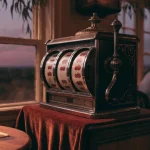
High volatility can mean less frequent wins and the possibility of larger payouts, but it cannot predict the outcome of a spin.

Volatility describes the pattern of a pokie’s payouts: how often wins tend to occur and how those wins are distributed. It is a feature of the game’s design, not a forecast for your session. When people ask what high volatility means on a slot machine, the useful answer is that payouts tend to be less frequent, with the possibility of larger wins. That does not mean a particular win is due, or that a large payout will arrive at all.
The term is sometimes used alongside “variance”. In practical terms, both point to how uneven or steady a game’s results can feel over time. A high-volatility pokie is not simply one that pays more. It can go through many spins without a significant payout, while a win, if it comes, may be larger than the smaller wins associated with a steadier payout pattern. The label describes a tendency, not a promise about any individual spin.
That distinction matters because a game’s volatility can be mistaken for a signal. A run without a win does not make the next spin more likely to pay. Nor does a recent win mean the game is less likely to pay again. Each spin is generated independently by a random number generator, so previous results do not determine the next combination. You cannot predict or manipulate the outcome by tracking a sequence, changing your timing or following a pattern.
High volatility means bigger swings in results, so it helps to check what is actually known about an operator before choosing where to play. Use the details below as a factual reference, not as evidence that any particular slot or operator guarantees a certain experience.
Uptown Pokies
You can note that Uptown Pokies has operated since 2017 under a Curacao licence. Its stated minimum deposit is A$20.
JustCasino
The available detail for JustCasino is its Curacao Gaming Control Board licence. You can use that as a basic licensing reference when considering the operator.
House of Pokies
You have a stated PayID payout speed of 1–24 hours and a minimum deposit of A$30, or A$10 when using PayID. Its source describes the licence as international, but does not name the jurisdiction.
Wild Tokyo
Wild Tokyo lists a Curacao licence and a A$10 minimum deposit. Its stated payout timing is 30–60 minutes for crypto and 1–5 days for fiat.
DragonSlots Casino
You can check DragonSlots Casino’s stated Curacao Gaming Authority licence, held by Jumpman Gaming Ltd. No deposit or payout details are provided here.
Bizzo Casino
Bizzo Casino’s listed licence is from the Curacao Gaming Control Board, with TechSolutions Group N.V. named. The available information does not include deposit or payout details.
Neospin
Neospin lists a Curacao Gaming Control Board licence, reference OGL/2023/176/0095, with Hollycorn N.V. named. You can use these details as its available licensing reference.
Golden Pokies
The only supplied detail for Golden Pokies is its Curacao licence, so there is little here to assess beyond that licensing information.
Thor Casino
Thor Casino lists a Curacao licence associated with Antillephone N.V. and Versus Odds B.V. Its stated minimum deposit is EUR 20.
Vegaz Casino
Vegaz Casino lists a Curacao licence with reference OGL/2024/1335/0780. Its stated minimum deposit is EUR 20.
Volatility can help you understand the broad shape of a game’s payout behaviour. If a pokie is described as high volatility, expect a less even pattern: fewer payouts, with the potential for larger ones. That is the central meaning behind phrases such as “high-volatility slot machines” or “high-volatility casino games”. The wording may vary; the idea is about payout distribution.
It does not tell you the exact size of a future win, how many spins will pass before a payout, or whether a particular session will end ahead. It also does not establish that a game is better than another. “High volatility” is a description, not a quality rating. Whether that pattern suits you depends on what you want from play, but that comparison is separate from what the label itself means.
A useful mental model is a map of tendencies, not a timetable. The map may tell you that payouts are less frequent and can be larger. It cannot tell you when one will appear. Treating the label as a timetable is where the idea stops being useful.
Volatility is also distinct from the notion that one spin can be “due”. Randomness can produce clusters and gaps, but a cluster does not create a rule for what follows. If the last several spins have returned nothing, the game’s mechanism does not remember that sequence and compensate on the next one. Likewise, repeated small wins do not prove that a larger payout is building. Patterns can be visible after results have occurred without offering a reliable way to call what comes next.
No system beats a pokie. Each spin is independent, and the game has a built-in house edge; neither a high-volatility label nor a betting pattern removes it. Volatility does not change randomness into a strategy, and it does not let you influence the result by raising or lowering a stake. A different stake changes the amount at risk, not the random combination produced by the spin.
This is why descriptions of high volatility should be read narrowly. They are not evidence that a game will repay losses, that a feature is close, or that a larger wager improves the chance of a favourable result. They do not guarantee that the larger-win potential will be realised during your play. The label can describe a game’s general payout character without describing your outcome.
Keep the decision practical: set a budget before playing and never wager more than you can afford to lose. Volatility is useful for understanding the kind of payout pattern a game is designed to have; it is not a reason to stretch a budget in pursuit of a result. Random remains random.
Attention: Volatility is a description of payout tendencies, not a promise of a future win or a signal that a payout is due.
A high-volatility pokie makes a clear exchange: payouts tend to arrive less often, but a win can be larger. That can suit you if you are comfortable with a variable session and have a bankroll that can absorb losses. It is a poor fit if you need frequent returns to keep playing or would be unsettled by losing your stake without a substantial payout.
The useful question is not whether a high-volatility game is “best” in general. It is whether its payout pattern suits your budget, expectations and reason for playing. Judge it by those criteria, not by the size of a headline win or the promise of a dramatic feature.
Set a budget before you play, and never wager more than you can afford to lose. Treat that amount as the full cost of the session, not as a balance you expect to recover. A larger potential payout does not make losses less likely in the short term, and a high-volatility game may use up a small balance before a notable win arrives.
Ask yourself how you would respond if the session ended without a significant payout. If that outcome would lead you to add money, borrow, or keep playing beyond your plan, the game’s risk profile does not match your circumstances. Choosing a lower stake can slow the rate at which your balance is exposed, but it cannot make a win more likely.
A practical comparison can be made with four questions:
| Criterion | What to consider |
|---|---|
| Budget | Can you accept losing the amount set aside for play? |
| Session goal | Are you comfortable with a session that may produce no substantial return? |
| Stake size | Does each wager leave room for the possibility of a long losing stretch? |
| Expectations | Are you judging the game by its payout pattern rather than by a single large win? |
This is a suitability check, not a prediction tool.
A large possible payout is not the same as a dependable source of returns. The defining trade-off is that high-volatility pokies pay less frequently, while individual wins can be larger. That may appeal to someone who values the possibility of a bigger result and accepts a less predictable session. It offers little reassurance to someone who wants regular small returns.
Do not use a previous result as a reason to expect the next one. Each spin is independent, generated by a random number generator, and cannot be predicted or manipulated. There is no system that beats a pokie; every spin carries a built-in house edge. Changing your approach because a game has paid recently—or has not paid for a while—does not give you control over the outcome.
The same caution applies to feature rounds. A bonus round can produce a large payout and still leave you with no profit overall. The feature’s size is not a measure of your net result. Avoid rapidly changing stakes during a bonus round, and do not treat a bonus feature as a reason to chase more play.
Dry spells are part of the trade-off, not evidence that a payout is due. The game does not keep a personal account of what you have lost and compensate you on a later spin. That expectation can turn a planned session into unplanned spending.
If your priority is the possibility of a larger individual win and you can tolerate losses along the way, a high-volatility game may fit your preferences. If preserving a small balance or receiving frequent payouts matters more, the same profile may feel frustrating. The “best” choice depends on which of those criteria you value; there is no universal winner.
A disciplined stake is part of that decision. High volatility calls for smaller, controlled wagers rather than stakes that leave little room for an extended run without a significant payout. Decide the stake and spending limit before starting. Do not raise either one to recover losses, and stop when the budget is gone.
For Australian readers, the legal setting also matters: the Interactive Gambling Act 2001 prohibits operators from providing real-money online pokies to people in Australia. No online pokie site is licensed in Australia; sites accessible to Australians operate under offshore licences. That is context, not an endorsement or an invitation to play.
If you are comparing options, make the criterion explicit: tolerance for uneven returns, capacity to lose the session budget, or preference for the possibility of a larger win. A title, feature or advertised top prize cannot answer those questions for you. Decide the limit first. Then keep it.
For Australians, the central legal distinction is between the person playing and the business supplying the game. The Interactive Gambling Act 2001 prohibits operators from providing real-money online pokies to people in Australia. The law targets the service provider; it does not impose a penalty on an individual player for taking part.
That does not make online pokies an authorised Australian gambling product. There is no Australian licence for an online pokie site, and sites that serve Australian players operate under licences from offshore jurisdictions rather than a domestic online casino licence. A foreign licence does not override Australian law or turn the service into one approved to offer pokies here.
The same legal framework covers online casino-style games more broadly, including poker, blackjack and roulette. Advertising real-money interactive gambling services, including online casinos, to Australian audiences is also prohibited. These rules concern the supply and promotion of the services, not the mathematical features of a particular game. A label such as “high volatility” does not change the legal position.
The Australian Communications and Media Authority (ACMA) is the federal agency responsible for enforcing the Interactive Gambling Act 2001 and monitoring compliance with federal interactive gambling laws. Its work includes taking action in response to prohibited services and seeking to limit Australians’ access to them.
ACMA can ask Australian internet service providers to block websites that provide prohibited interactive gambling services or advertise those services in Australia. Blocking is an enforcement measure aimed at access to the website; it does not create an Australian licence for the site, nor does it mean every prohibited service will be inaccessible at every moment. The practical point is that access may be restricted, and the regulatory response is active rather than merely theoretical.
ACMA reports that, following enforcement action, it has blocked more than 1,455 illegal gambling and affiliate websites since November 2019. This total includes affiliate sites as well as gambling sites, so it should not be read as a count of online pokie operators alone.
ACMA Enforcement
The Australian Communications and Media Authority has blocked over 1,455 illegal gambling and affiliate websites since November 2019 to limit access to prohibited services.
There is also a reported difference in the number of illegal services said to have left the Australian market after ACMA began enforcing the rules in 2017. One account puts the figure above 210; another reports more than 190. Those figures do not match, so neither should be presented as an uncontested count. Both describe withdrawals following enforcement, not a change that makes the remaining services legal.
A person considering high-volatility online slots should separate two questions: how a game is described, and whether the service offering it is lawful in Australia. Volatility is a game characteristic; it does not determine whether an operator may provide the game to someone in the country. The relevant legal restriction falls on operators supplying real-money online pokies to Australians.
Players face no penalty under the Interactive Gambling Act 2001 for playing, but that is not the same as consumer protection or official approval. A site may be based overseas, subject to a foreign regulator and outside the Australian licensing framework. ACMA’s blocking powers and enforcement actions also mean that access to a site can be disrupted. Do not treat a foreign licence, a familiar game title or a functioning webpage as evidence of Australian authorisation.
Payment rules are separate but relevant: credit cards are banned for online gambling in Australia. A payment option being displayed by a website does not alter that prohibition or the legal status of the gambling service.
If you encounter claims that high-volatility pokies are available through an Australian-licensed online casino, the licensing claim conflicts with the legal framework: no online pokie site is licensed in Australia. Nor does the absence of a player penalty establish that the operator is entitled to provide the service. These distinctions matter more than promotional labels. The law turns on who supplies the gambling service and to whom—not on whether a game advertises rare, larger payouts.
A high-volatility pokie can feel quiet for a long stretch, then deliver a much larger win. That uneven rhythm is the part of volatility you notice during play: significant payouts are uncommon, and the gaps between them can be extended. The occasional strong result does not cancel out the dry spells that came before it or promise another one soon.
This pattern is easy to misread. After many spins without a notable payout, it may seem as though a win is due. It is not. Each spin is independent, so earlier results do not make a later combination more likely. Nor can a run of wins tell you that another is coming. There is no system that beats a pokie; its built-in house edge remains, whatever sequence appears on the screen.
The contrast with a lower-volatility game is mainly one of rhythm. Lower-volatility pokies tend to return smaller wins more frequently, while a high-volatility game may go longer without a significant payout and can produce a rarer, larger one. More frequent small wins are not proof of profit, just as a large win is not evidence that the game will keep paying.
Legal Risk
The Interactive Gambling Act 2001 prohibits operators from providing real-money online pokies to people in Australia; no online pokie site is licensed domestically.
During a dry spell, your balance may fall while the game offers little to offset the wagers. A feature or a substantial win might arrive later, but it might not arrive during your session. High volatility is associated with a need for a deeper bankroll because play can continue through longer gaps between significant payouts. That is a description of the risk pattern, not a promise that a larger balance will eventually produce a win.
The screen can make the pattern feel more predictable than it is. A near miss, a sequence of low-value results or a bonus symbol appearing without a feature may seem like evidence that the game is building toward something. None changes the odds of the next spin. Visual tension is part of the experience; it is not a signal.
A single large payout can also distort how a session looks in retrospect. If you focus on that result, it may seem to define the whole session. But the same game can deliver a long run of smaller or losing outcomes before any standout win, and the standout result may never appear for you. High volatility describes the possibility of that lopsided pattern, not a schedule for when it will turn.
There is no universal answer. A player who wants frequent, modest returns may find long quiet stretches frustrating. Someone comfortable with a more uneven pattern may prefer the possibility of a rarer, larger payout. Neither preference changes the underlying uncertainty, and neither makes a high-volatility game a reliable way to earn money.
Keep the distinction between a possible payout and an expected session outcome. A large win can happen; it does not follow that the game is due to provide one, or that continuing will recover losses. Set a budget before play and never wager more than you can afford to lose. If the balance reaches that limit, the dry spell is not a reason to raise it.
The comparison is about the shape of the experience, not a verdict that one style is better. For high volatility, the defining feel is uneven: fewer significant wins, longer gaps, and the possibility of a larger result. The gaps are real. The promise is not.
RTP and volatility describe different features of a pokie. RTP, or return to player, is a long-run average of how much a game returns from wagers across play. It is not a promise about what you will receive during one session. Volatility describes the shape of the payout pattern: it concerns how payouts are distributed, not the average return.
That distinction matters when you see a game described as both high RTP and high volatility. The labels are not opposites. RTP concerns the overall return measured over the long run; volatility concerns how unevenly that return may arrive. A higher RTP does not mean frequent wins, and high volatility does not by itself tell you the RTP. You need to assess each measure separately rather than treating one as a substitute for the other.
For a player comparing high-volatility pokies, RTP can help describe the game’s stated long-run return, while volatility indicates that the path through a session may be uneven. Neither figure predicts the next result. Every spin is independent, and no system beats a pokie: its built-in house edge remains, regardless of previous outcomes or a game’s labels.
Bonus-stage games make the distinction especially relevant. Games with multiple bonus stages can have lower RTP and high volatility, and pay out less frequently. A feature may look substantial when it arrives, but its size does not establish that the session has produced a profit. Bonus rounds can end with no net gain, even when they include a large payout. A bonus buy, where offered, cannot guarantee long-term profit either.
When comparing RTP figures, check that you are looking at the game’s stated value rather than inferring it from a provider name, a feature or a volatility label. The number is a long-run measure, not a forecast for your balance. It cannot tell you whether a feature will trigger during your session or what an individual spin will return.
The useful comparison is therefore two-part: what long-run return is stated, and what payout pattern does the game present? Keep those answers separate. Set a budget before play and never wager more than you can afford to lose. In Australia, no online pokie site is locally licensed; such sites are offshore-licensed, while Australian law prohibits operators from providing online pokies to people in the country.
The practical difference between high- and low-volatility pokies is the shape of their payouts. High-volatility games can produce larger wins, but those wins are less frequent. Low-volatility games tend to pay smaller amounts more often. Neither pattern makes one option better for every player; the right fit depends on what you want from a session.
| What matters to you | High volatility | Low volatility |
|---|---|---|
| Typical payout pattern | Less frequent wins, with the potential for larger ones | Smaller wins occurring more often |
| Session feel | Longer gaps between notable payouts may be part of the experience | More frequent payouts may suit you better |
| Best fit by preference | You accept a less frequent return for the possibility of a larger win | You prefer smaller, more regular payouts |
Treat the table as a comparison of tendencies, not a promise about what your next session will look like. A low-volatility game does not guarantee a steady run of wins, and choosing a high-volatility game does not make a large payout due. Every spin is independent, so previous results do not improve or weaken the next one. There is no system that beats a pokie; each spin has a built-in house edge.
So, is high or low volatility better for pokies? Use your preferred payout rhythm as the criterion. If you are comfortable with less frequent wins in exchange for the possibility of a larger payout, high volatility may match your preference. If you would rather see smaller wins more often, low volatility may be the more suitable style. Those are preferences, not predictions.
The trade-off also affects how you judge a session. A run with no notable payout does not, by itself, mean that a high-volatility game is about to pay. Likewise, several smaller wins on a low-volatility game do not establish that the session will remain favourable. The label describes a broad payout pattern, not a schedule.
Before playing, set a budget and do not wager more than you can afford to lose. Choose the style that fits your entertainment preference and your comfort with its payout pattern, rather than selecting a game because you expect it to recover losses or deliver a particular result. If neither pattern feels acceptable within your budget, skipping the session is a valid choice.
There is no universal winner. The better fit is the one whose pattern you understand and can accept without treating its possible payouts as an outcome you are owed.
A progressive jackpot grows as a portion of each wager is added to the prize pool. That mechanism gives the game a prize that can become substantial, but it does not make a jackpot more likely to arrive on your next spin. Progressive pokies generally pay out less frequently and are usually high-volatility games: the headline prize comes with a payout pattern that may involve long stretches without a significant return.
The contribution to the jackpot is part of the game’s design, not a personal savings pot that you can expect to reclaim. Your stake does not buy a guaranteed share of the eventual prize, and previous spins do not bring the next one closer. Each spin is independent, driven by a random number generator; no system beats a pokie or predicts its result. The game also has a built-in house edge.
That makes “chasing” a jackpot a poor basis for deciding how long to play. A growing prize can attract attention, but its size does not change the random outcome of an individual spin. Treat the jackpot as a possible feature of the game, not a target that justifies increasing stakes or extending a session.
If you choose to play, set a budget beforehand and never wager more than you can afford to lose. Progressive games may be a poor fit if a small balance cannot withstand infrequent payouts. No jackpot changes that arithmetic. Briefly.
For Australian readers, the legal context matters: the Interactive Gambling Act 2001 prohibits operators from providing real-money online pokies to people in Australia. No online pokie site is licensed in Australia; sites serving Australians operate offshore under foreign licences, and access may be blocked by ACMA. That is not a recommendation to seek out such sites.
A pokie with several bonus stages can look generous on screen while paying out less frequently overall. The layered features may promise more chances for activity within a bonus, but they do not make the bonus itself arrive often. Games built around multiple stages are associated with low RTP and high volatility, a combination that can mean longer stretches between payouts.
The useful distinction is between what happens inside a feature and how often you reach one. A bonus may move through several steps and produce a large payout, yet that single result does not show whether the session ended in profit. Your total result depends on all wagers and returns, not the size of one highlighted feature. A dramatic animation is not a balance sheet.
RTP is a long-run average, not a forecast for your session. It cannot promise that a bonus will trigger, or that its stages will pay enough to cover what you have wagered. Each spin is independent; previous results do not make a feature more likely on the next one. There is no system that beats a pokie, and every spin carries a built-in house edge.
Attention: A large payout during a bonus feature can still leave you with no overall profit for the session.
If you choose a multi-stage game, treat the bonus as an uncertain feature, not a planned source of income. Set a budget before playing and never wager more than you can afford to lose. A large feature payout can still leave you without a profit. That distinction matters.
Compare games by the pattern you are willing to tolerate, rather than by how elaborate their bonus screens look. More stages may add complexity, but they do not establish frequent payouts or reliable returns. Keep the decision tied to your entertainment budget, and stop when that budget is gone.
A Pragmatic Play badge identifies the provider, not a shared payout profile. Treating every title from one studio as a high-volatility pokie is like sorting a table by its manufacturer and assuming the figures in every row match. The useful criterion is the individual game’s stated volatility, where that information is available—not the provider name alone.
If a game’s information does not state its volatility, the label cannot fill the gap. A promotional description or a player’s account of a big win is not proof that the same result pattern applies to every session, or to every Pragmatic Play title. Check the specific game’s information before deciding whether its stated characteristics fit what you want. If they are not disclosed clearly, regard the profile as unverified rather than inferring it from the studio.
There is a firm limit to what any description can tell you: each spin uses an RNG and is independent of earlier results. A previous run of losses does not make a feature due, and a provider label cannot predict or manipulate the next result. There is no system that beats a pokie; every spin remains random, with a built-in house edge. Dry spells are not evidence that a particular game is about to pay.
For Australians, there is also a legal distinction worth keeping separate from game selection: the Interactive Gambling Act 2001 prohibits operators from providing real-money online pokies to people in Australia. No online pokie site is licensed in Australia; sites serving Australians operate under offshore licences. A provider’s name does not change that position.
If you are assessing a game, base the decision on information about that title, not a studio-wide claim. Set a budget before play and never wager more than you can afford to lose. A familiar label is not a forecast.
High-volatility pokies can leave you waiting through a long run without a significant payout. A feature may arrive late—or not before your balance is gone. That is why this style of play calls for smaller, disciplined stakes rather than wagers that consume your bankroll quickly.
A smaller balance can run out before a feature triggers. Raising your stake to make a feature arrive sooner does not change its chance of appearing: every spin is independent, and previous results cannot predict or influence the next one. There is no system that beats a pokie; each spin has a built-in house edge. A feature is not a debt the game owes you.
Set a session budget before you start, and treat it as money you can afford to lose. Decide in advance when you will stop, and do not add funds or increase stakes to recover losses. If the budget is gone, stop. Discipline matters most when a dry spell makes continuing feel like the only way to reach a payout.
The practical test is whether your chosen stake leaves room for a session that may include no feature and no meaningful return. If it does not, lower the stake or choose not to play. High volatility is associated with rare larger wins and extended gaps between significant payouts, so a deeper bankroll may be needed to withstand that pattern; it still cannot guarantee a win.
Keep the limit simple: set your budget, stick to it, and never wager more than you can afford to lose. A planned stop is better protection than a hopeful increase.