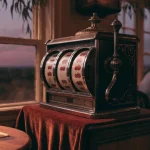
A practical guide to how three-reel slots work, what game information can show and why past results do not predict the next spin.

A three-reel game may look simple: a small set of reels, familiar symbols and a result that is easy to read at a glance. That visual clarity can make each spin feel easier to interpret than a more elaborate game. It does not make the result easier to predict. The essential point is the same across three-reel slot games: each spin is random and independent of the spins around it.
A Random Number Generator (RNG) determines the outcome of each spin. The result you see is not a message about what is due next, nor a continuation of a pattern that has already appeared. A winning result does not make another win more likely on the next spin. A run of losses does not mean a win is closer. The previous spin has no influence on the next one.
That distinction matters because people naturally look for patterns. If a particular symbol appears several times, it can seem as though it is “running hot”. If a result narrowly misses a combination, the next spin may feel as if it should complete it. But a sequence that looks meaningful to a person is not evidence that the RNG is responding to it. Each new spin is a separate event.
If you’re choosing reel slots in Australia for 2026, the details available about an operator can help you decide what to check before you play. Use these verdicts as a concise reference, not as a substitute for reviewing the terms yourself.
Uptown Pokies
Uptown Pokies has operated since 2017 and lists a Curaçao licence. Its minimum deposit is A$20.
JustCasino
JustCasino lists a licence from the Curaçao Gaming Control Board. That licensing detail is the main available point to consider as you assess the operator.
House of Pokies
House of Pokies lists PayID payouts in 1–24 hours and a minimum deposit of A$30, or A$10 when using PayID. Its source describes the licence as an international iGaming licence but does not name the jurisdiction.
Wild Tokyo
Wild Tokyo lists crypto payout times of 30–60 minutes and fiat payout times of 1–5 days. Its minimum deposit is A$10, and it lists a Curaçao licence.
DragonSlots Casino
DragonSlots Casino lists a Curaçao Gaming Authority licence associated with Jumpman Gaming Ltd. This licensing information is the key detail available for your consideration.
Bizzo Casino
Bizzo Casino lists a Curaçao Gaming Control Board licence and identifies TechSolutions Group N.V. This gives you a specific licensing and company detail to check.
Neospin
Neospin lists Curaçao Gaming Control Board licence OGL/2023/176/0095 and identifies Hollycorn N.V. These are the available distinguishing details for your review.
Golden Pokies
Golden Pokies lists a Curaçao licence. That is the main available fact to consider as you assess the operator.
Thor Casino
Thor Casino lists a Curaçao licence through Antillephone N.V. (Versus Odds B.V.). Its minimum deposit is EUR 20.
Vegaz Casino
Vegaz Casino lists Curaçao licence OGL/2024/1335/0780. Its minimum deposit is EUR 20.
The reels show the outcome after it has been determined; they do not provide a reliable preview of future outcomes. Watching symbols pass, pause or settle may make the process feel like a sequence of clues. It is still the current spin being presented, not information about the next one.
This is also why a three-reel slot machine should not be judged by a short run of results. A brief stretch can contain wins, losses or repeated symbols in different combinations. None of those outcomes establishes a trend that carries forward. The next spin remains random, regardless of what happened in the previous one.
The same reasoning applies when results appear to alternate: win, loss, win, loss. Alternation can look like a pattern, just as several similar outcomes can. Neither predicts what follows. Random sequences can look orderly or uneven over a short span; appearance is not control. A pattern may describe what has happened, but it cannot tell you what the RNG will produce next.
A useful way to think about play is to treat every spin as its own event. You can note what has occurred, but do not use that record as a prediction. A long gap since a certain symbol appeared does not make it more likely to arrive. Repeating the same choice or changing it after a loss does not alter the independence of the next result.
This is true whether you are considering a traditional-looking three-reel game or another format. The number of reels may shape the presentation and the way you read the screen, but it does not turn earlier results into instructions for later ones. Three reels are not a sequence of chances that can be decoded by watching closely.
The same principle holds across online casino games with three reels. The display can change how the result is shown, but the important point remains that the RNG generates each spin independently. A familiar layout can make outcomes seem more legible; it cannot make them foreseeable.
A run of results can tell you what has already happened. It cannot establish that the game is due to pay, that a particular symbol is likely to appear next, or that a winning sequence is building. Those are interpretations laid over past outcomes, not dependable conclusions about a future spin.
This is especially worth remembering when a near miss feels persuasive. A result that looks close to a desired combination may hold your attention, but it does not make the next result closer to completing it. The next spin is not obliged to continue, correct or reward the previous one. Dry, but useful.
So, when comparing three-reel games by how they feel to play, separate the visual experience from the underlying randomness. A compact layout may be easier to follow, while a more detailed screen may offer more to look at. Neither changes the independence of individual spins. The best fit depends on which presentation you prefer, not on an imagined ability to read a streak.
For anyone browsing free three-reel games or other slot formats, the same basic rule applies: a previous outcome is history, not a forecast. Treating spins as separate events helps keep the game’s visible patterns in perspective. It also prevents a common mistake—assuming that the game owes you a particular result because of what came before.
RTP, or return to player, is a theoretical measure of how much a slot is expected to return across a very large volume of play. It is useful when you want to compare games on the same basis, but it does not forecast what will happen in a short session. Think of it as a long-run comparison, not a result you can claim from an individual play.
The calculation is based on many spins, often millions. At that scale, a game with a higher RTP is theoretically expected to return more than one with a lower RTP. That makes RTP a useful criterion when comparing three-reel games, including free-play versions: if theoretical return is your priority, the higher displayed figure is the stronger comparison on that measure.
The word “theoretical” matters. RTP describes expected performance over an enormous number of spins, not a schedule of repayments. It does not say that a particular session will return a set share of what you stake, or that results will move steadily towards the displayed percentage. A short run can differ sharply from the long-run calculation. The figure helps compare games; it cannot tell you what your next result will be.
Open the game’s rules or paytable and look for the RTP entry. These information panels commonly show the configured percentage alongside details about symbols and payouts. Check the figure in the game itself rather than relying on a lobby description: the in-game information is the relevant reference for that version.
If the percentage is not immediately visible, scan the rules and paytable carefully. They can be opened from the game interface, though the control may be labelled with an information symbol or menu icon. Do not confuse a listed prize or payout for a particular combination with RTP; those describe different things. RTP is the theoretical return percentage for the game as a whole.
A practical comparison point is 96% or higher. Treat that as a screening criterion, not a promise of a favourable result. When two games both meet it, compare their displayed RTP figures directly; a higher value indicates the better theoretical return over time, all else being considered on that measure. It still does not make one game certain to pay more during your session.
| What you are comparing | What RTP can tell you |
|---|---|
| Two games with different displayed figures | Which has the higher theoretical return over time |
| A displayed figure against a short session | Nothing certain about that session’s outcome |
| A game’s rules or paytable | The RTP stated for the game version you are viewing |
For a three-reel slot, reel count alone does not establish its RTP. Two games can share a classic layout and still show different theoretical returns. So if you are narrowing down the best three-reel slots by return, compare the figures in their rules or paytables rather than assuming that a familiar appearance means a particular percentage.
The criterion depends on what matters to you. If theoretical return is the priority, start with the displayed RTP and favour a higher figure, using 96% as a useful threshold. If that is not your main concern, RTP alone cannot decide which game suits you. It is one comparison measure, not a complete verdict.
Keep the distinction clear: the paytable gives you a figure for long-run comparison; it does not convert that figure into a personal forecast. Use it to compare like with like, and read it before treating one game as the better choice on RTP.
Theoretical RTP is a long-run comparison based on millions of spins, not a guaranteed return for an individual play or short session.
Long-run measure. Not a promise.
Sweet Bonanza is a useful case study in why a game’s name alone does not tell you its configured return or bonus details. A specialist review reports an RTP of 96.51% for the version it examined. Treat that as a version-specific figure, not a fixed value guaranteed wherever the game appears: different versions may display different RTPs.
That distinction matters more than a headline percentage. RTP is a theoretical measure, not a forecast for a session or a promise about an individual result. When comparing game information, the relevant figure is the one shown for the version in front of you. A number quoted in a review may describe a different configuration. The decimal places do not make it universal.
Sweet Bonanza uses scatter symbols to trigger its free-spin feature. A specialist review describes four or more scatters as awarding 10 free spins. As with the RTP figure, this is a reported feature description, not a reason to assume that every version will show identical rules. The game’s own information is the more relevant reference for the configuration being presented.
Free spins are a bonus mode, not a separate game with a different promise of return. They change how the feature plays, but they do not make a result predictable. The number of spins awarded also says nothing by itself about whether the feature will produce a win. A bonus can be triggered without delivering a particular outcome.
For someone comparing bonus-focused games, the useful questions are specific: what symbol starts the feature, what number of scatters is required, how many spins are awarded, and whether the rules describe any other feature conditions. Those details are more informative than a broad label such as “free-spin slot.” They also help distinguish what the game actually offers from assumptions based on another title.
A specialist review reports that multiplier bombs can appear during Sweet Bonanza’s free spins. When more than one appears, their values are added together before being applied to a winning tumble. In practical terms, the mechanic links the combined multiplier value to a win in that tumble; the presence of a bomb alone is not the same as a guaranteed payout.
A multiplier bomb does not guarantee a payout; its value only applies if there is a winning tumble in that spin.
The sequence matters. A player may see a multiplier during the feature, but its role depends on the tumble it applies to. This makes the mechanic different from simply adding a fixed bonus to every free spin. To understand the conditions, check how the game’s rules explain the interaction between bombs, their combined values and winning tumbles. A short description in a game listing may omit the detail that determines how the feature works.
A bonus animation can make a mechanic look more decisive than it is. The rule is conditional: multiplier values are combined before application to a winning tumble. No winning tumble, no basis for treating the multiplier as a standalone result. Dry, but important.
A comparison is clearer when the criteria are kept separate:
| What to compare | What it tells you |
|---|---|
| Displayed RTP | The theoretical return associated with the version shown |
| Scatter rule | The trigger described for starting free spins |
| Free-spin award | The number of spins stated in that version’s rules |
| Multiplier-bomb rule | How bomb values interact with a winning tumble |
The reported 96.51% figure and the described scatter and multiplier features give a snapshot of a version covered by a specialist review. They should not be combined into a claim that every Sweet Bonanza release has the same settings. Version differences are precisely why matching the title is not enough.
This is especially relevant when a game appears in a list of three-reel bonus games or free online pokies. Search labels are broad; they do not establish a game’s reel layout, RTP or bonus configuration. Sweet Bonanza’s name may appear beside such labels, but the relevant comparison is the actual game information, not the category attached to it.
For a feature-led comparison, Sweet Bonanza stands out in the description of its scatter-triggered free spins and multiplier bombs. For an RTP-led comparison, the decisive figure is the one displayed for the version being considered. Neither criterion determines which game is “best” for every player. One comparison may favour a stated theoretical return; another may focus on bonus mechanics. The winner depends on the criterion—and on the version.
A classic three-reel game can look simple in the lobby: familiar symbols, a compact layout and a short title. That view does not tell you which RTP configuration is attached to the game. Treat the lobby tile as an index, not as evidence of the game’s return setting.
Checking RTP
Identify the game
Confirm the exact game and version you are playing.
Open information
Access the rules or paytable via the information symbol or menu icon.
Record the figure
Locate and record the stated RTP percentage from the in-game panel.
Compare
Compare this verified figure against other titles.
A specialist review reports that the operator selects the RTP build and that the selected version is not shown on the lobby tile. Because this can differ between versions, check the game’s own information panel. Open its rules or paytable and find the stated RTP there. If the figure is absent or unclear, you do not have enough information to compare that configuration on RTP.
When reviewing classic three-reel games, put the same details side by side rather than relying on labels such as “classic” or “original.” Those describe a style, not a return figure. A small table can keep the comparison precise:
| Check | What to record |
|---|---|
| Game and version | The title as shown inside the game |
| RTP | The percentage stated in its rules or paytable |
| Information location | The panel or page where you found the figure |
| Clarity | Whether the displayed configuration is explicit |
The useful comparison is between the RTP figures for the actual versions presented to you. A higher stated RTP is theoretically more favourable as a long-run comparison, but it does not make one individual result predictable. Nor does the three-reel format itself establish that a game has a higher return. Keep those criteria separate.
If you are comparing free versions, use the displayed game information to understand what that version says about its configuration. Do not assume that a free-play screen proves which RTP build would be attached in another setting. The relevant question is whether the information belongs to the version you are examining.
Classic titles may use similar artwork or names, while the information panel is where the configuration should be verified. Look for the RTP entry in the rules or paytable rather than inferring it from symbols, the number of reels, or the game’s age. If the panel offers more than one version or configuration, note which one is currently selected; a figure for a different build is not a useful comparison.
For a quick shortlist, you can use 96% or higher as a screening criterion, then confirm that the figure appears in the in-game information for the specific version. This is a comparison threshold, not a promise of results. A game that meets it is not guaranteed to return that proportion during a short session, and a familiar classic presentation does not change the meaning of the figure.
The order matters: identify the exact game, open its rules or paytable, record the stated RTP, and only then compare it with another title. If you cannot confirm the setting, mark it as unverified instead of filling the gap with an assumption. That leaves you with a more honest comparison: the figure you can see, attached to the version you actually checked.
No guesswork required.
If you are looking for three-reel pokies to play for real money, the legal distinction in Australia is between what operators may offer and whether an individual player is penalised. The Interactive Gambling Act 2001 bars locally licensed operators from providing online pokies to people in Australia. The restriction also covers online casino services offering table games. A familiar local licence therefore does not make an online casino game lawful for an operator to provide.
The law’s focus on operators does not mean that offshore casino services are authorised in Australia. Individuals are not penalised simply for playing at an offshore site, but that is different from having a locally regulated service with Australian consumer protections. Offshore operators sit outside those protections, so you should not treat their availability or terms as equivalent to those of a domestic service.
That distinction matters when comparing online three-reel games with other pokies. Reel count describes a game’s format; it does not change the rules governing who may offer it. A site displaying a game to Australian visitors does not, by that fact alone, establish that the service is permitted to provide real-money gambling here. Nor does a game’s presence in a lobby settle the legal status of the operator.
Legal Restriction
The Interactive Gambling Act 2001 prohibits locally licensed operators from providing online pokies to people in Australia.
Sweet Bonanza requires the same careful wording. A specialist review describes it as available to Australian players only through offshore-licensed casinos. That is a statement about the route through which the game may be encountered, not an indication that an offshore licence is an Australian licence or that the service is locally approved. Availability can also change, so a listing should not be read as a lasting guarantee of access.
For people comparing free online three-reel games with real-money play, keep the two contexts separate. A free-play version does not establish that the corresponding real-money service can lawfully be offered by an Australian operator. Likewise, being able to view a game online does not itself confirm the provider’s status or create Australian consumer protections. The relevant question is not only whether a game appears, but who is supplying it and under what legal framework.
The practical comparison is therefore not simply “which game can you open?” Consider the legal position first, then distinguish between locally offered services and offshore services. The Act prohibits Australian-licensed operators from offering online pokies; the fact that an individual is not penalised for playing offshore does not reverse that restriction. For a player, those are separate points—not a loophole that turns an offshore casino into a locally regulated one.
This section concerns real-money access, not whether a particular reel layout is more appealing or whether a game’s features suit your preferences. Those details cannot settle the legal question. A three-reel slot, a larger-format video game and a table game can all fall within the online casino restrictions when offered for real money to people in Australia. The format changes; the legal boundary does not.
When comparing free-play three-reel games, treat the rules or paytable as the first place to check for the game’s RTP. The figure is usually displayed there, rather than in the game’s title or artwork. A familiar layout may help you recognise a classic style, but it does not tell you what RTP is configured for that particular game.
Open the information panel and look for a section labelled “RTP”, “return to player” or similar. The wording and menu layout can differ between games, so check the rules as well as the paytable if the figure is not immediately visible. If you cannot find an RTP entry, do not infer one from the symbols, reel count or apparent simplicity of the game.
A short comparison table can keep the choice focused:
| What to check | What it tells you |
|---|---|
| RTP entry in the rules or paytable | The displayed theoretical return for that game configuration |
| Paytable details | How the game describes its symbols and listed wins |
| Game title and presentation | Which game you have opened, but not its RTP |
For free 3-reel slot machine games, this distinction matters because presentation is not a substitute for game information. Two games can both look like three-reel pokies without the artwork revealing their displayed RTP. If comparing several options, note the figure shown for each one and compare like with like; do not fill a blank with a guess.
The paytable is useful even when you are only exploring free games slots with three reels. It lets you check the information the game actually supplies, rather than relying on a label or a visual impression. If your shortlist is based on RTP, an entry you cannot locate is not a figure you can compare. Leave that cell blank.
Free play makes it easy to browse at your own pace, but it does not make the information panel irrelevant. Start with the rules, record the RTP where it is shown, and use that displayed figure as the comparison point. The useful result is not a claim that one game must suit everyone; it is a clear basis for deciding which options match your preference. A tidy comparison beats guesswork.
A browser-based game and a downloadable app are different ways of loading software; neither changes whether the service is permitted or reachable in Australia. A three-reel game advertised as playable without a download may run in a browser, but that does not guarantee that its site will load. Nor does an app download guarantee ongoing access. Availability depends on the service and on access restrictions, not on the number of reels or the game’s features.
The Australian Communications and Media Authority (ACMA) enforces the Interactive Gambling Act 2001 and monitors compliance with federal interactive-gambling laws. It can ask Australian internet service providers to block websites that provide prohibited interactive gambling services or advertise them in Australia. The regulator’s enforcement information reports that it has blocked more than 1,455 illegal gambling and affiliate websites since November 2019. Offshore gambling domains are actively blocked, so a page that fails to open may reflect an access restriction rather than a fault with the game or your device.
That distinction matters when comparing browser access with a download. Installing software does not change the legal status of the service, and a blocked website is not evidence that a particular game has stopped working everywhere. Equally, a site loading successfully does not establish that the service is lawful or that Australian consumer protections apply. Offshore operators sit outside those protections.
ACMA’s reported total for illegal services that withdrew from Australia since enforcement began in 2017 is inconsistent across sources: one figure is more than 210, while another is over 190. Treat those totals as conflicting reports, not as a precise count. The clear practical point is narrower: enforcement can affect whether an offshore gambling site is accessible, regardless of whether it offers browser play or a downloadable option.
A result in a free-play three-reel game is one outcome, not a clue about what the next spin will show. The game’s Random Number Generator (RNG) determines each spin independently. Previous symbols do not make a particular combination more or less likely on the next turn.
That matters when a short run looks patterned. A symbol appearing several times in quick succession does not establish that it is “due” to appear again, and a near miss does not bring a win closer. The next spin is not a response to the last one. It is a separate random event.
Free play can show you how the game presents a spin: where symbols land, how a displayed combination is treated, and what appears on screen after an outcome. It cannot turn a brief sequence into evidence about what will happen next. A handful of spins is simply a handful of individual results.
The same caution applies to streaks. A run of wins does not confirm that the game has entered a favourable phase; a run without a win does not prove that one is imminent. Those interpretations assign meaning to past outcomes that the independent RNG process does not provide.
A free-play session also should not be treated as a forecast of real-money results. What you observe is the outcome of that session, not a promise about a later one. Keep the distinction narrow: free play lets you observe the game’s presentation, while each spin remains unpredictable.
If you are comparing several three-reel games in free play, note what each spin actually shows rather than building a prediction from a short run. One result can tell you what happened. It cannot tell you what comes next.
No pattern to chase.
An online three-reel game can look simple, but its visible layout does not tell you how it is configured. Online pokies use a Random Number Generator (RNG) to determine outcomes, and each game also has a theoretical return to player (RTP) percentage. Treat these as separate details: the RNG concerns how outcomes are generated, while RTP describes a statistical return across a very large number of spins. Neither tells you what a particular spin will produce.
Before considering a game, open its information panel and look for the rules or paytable. Check whether an RTP figure is displayed and whether the panel identifies the version or configuration in use. A lobby image or game title alone is not enough to establish the configured RTP. If the figure is absent or unclear, you cannot make a reliable comparison from the lobby.
A useful check is to record the displayed RTP alongside the game name, then compare like with like. The reel count is not a measure of return, and a familiar title does not guarantee that every version has the same configuration. The details inside the game matter more than its appearance.
In Australia, an RTP display does not establish that a service may lawfully offer the game. The Interactive Gambling Act 2001 prohibits operators from providing real-money online casino games, including pokies, to people in Australia. So this is a way to understand game information, not an endorsement of wagering.
Keep the check narrow: identify the game’s displayed configuration, read the rules, and do not infer a return from the graphics or name. If the information panel does not make the setting clear, treat the comparison as unresolved. A neat icon is not a specification.
“Three reels” describes a visible feature of a game; “three-reel slot” is a category label for a style of pokies. The terms overlap, but they are not interchangeable in every context. A game may show three reels without matching the traditional layout or play style that someone expects from a classic three-reel title.
That distinction matters when you compare games. Reel count tells you how the game is arranged, not how favourable its returns are. To compare potential returns, use the displayed RTP rather than the number of reels. A higher RTP theoretically offers a better return over time than a lower one, but it does not promise a particular result for you.
A practical comparison table needs separate columns: reel count, game style and RTP. That prevents a visual detail from standing in for a measurable comparison. If two games both have three reels, the one with the higher displayed RTP has the theoretical edge on that criterion; the other may still suit you better for its style.
There is no automatic winner. Choose by the feature you value, and treat reel count as a description—not a shortcut to better returns. Different measures.
Yes. Check the game’s rules or paytable for its RTP, and verify the figure in the in-game information panel before wagering.
A higher RTP is theoretically better for players over a very large number of spins, but it does not predict the return from a short session.
Yes, you can play for real money at offshore casinos, but winnings are never guaranteed. Online pokies cannot be offered by Australian-licensed operators.
RTP is a theoretical statistical measure of expected returns across a vast number of spins, often millions. It describes long-run performance, not what you will receive in a particular session.
Australian-licensed operators cannot offer online pokies, including Sweet Bonanza. Australian players may find it at offshore-licensed casinos, but those operators are outside Australian consumer protection and the ACMA can block access to their sites.
Compare the RTP figures shown in each game’s information panel and look for slots at 96% or higher. A higher figure indicates a better theoretical long-run return, not a guaranteed result.